Saturday, 26 March 2011

Graham Power QPM Interview Part 3 (of 3)


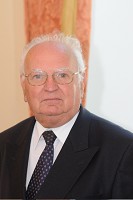
In the final interview (of this series) with Former Jersey Chief Police Officer, Graham Power QPM, Mr. Power discusses the role of Home Affairs Minister and what he believes it should be. He also discusses the role of Jersey’s Media - that is the “discredited” media and Bloggers.

Although it’s not a view that Mr. Power necessarily shares, it is the opinion of Team Voice, that Jersey’s mainstream (“discredited”) media ARE lapdogs to our establishment and are creating a very distorted historical record of the Child Abuse, the Child Abuse Investigation and the subsequent “dubious” suspension of Mr. Power himself.

We are proud of the part we are able to play in bringing some balance to the reporting of our mainstream media and are able to provide the public, and the history books, with these in-depth interviews with the key figures in this dark period of Jersey’s history. Although we still maintain that we shouldn’t have to be doing it but are left with no choice due to the lack of any meaningful "journalism" in Jersey.

That said we are unable to bring you any in-depth interviews with the Home Affairs Minister, Senator Ian Le Marquand, as he won’t even acknowledge receipt of our e-mails let alone answer any questions in them………and so history shall record.

Part one of this interview with Mr. Power can be viewed HERE and part 2 can be viewed HERE.


Tuesday, 22 March 2011

Graham Power QPM Interview Part 2 (of 3)

In part 2 of our series of exclusive and in-depth interviews with Jersey’s Former Chief of Police, Graham Power QPM, (Part one can be viewed HERE) the subject is brought back to where this all started. It all started with the Former Chief Officer and his Deputy Chief Officer, Lenny Harper, investigating and exposing decades of Child Abuse in Jersey’s State run institutions.

Decades of Child Abuse that might never had been exposed if it wasn’t for “Operation Rectangle”. Decades of Child Abuse victims/survivors remaining silent until a high profile media campaign won the trust of many survivors and victims.

This is all about Jersey’s dirty secret(s) that some people in authority would have wanted kept a secret. The very people employed by our government to nurture and “care” for them abused children in Jersey’s institutions. It’s about Child Abuse.

The quality of the Child Abuse Investigation (Operation Rectangle) according to Mr. Power, and others, is nothing more than “a sideshow.”


Thursday, 17 March 2011

Graham Power QPM Interview Part 1 (of 3)


After the very short sound-bite the Former Chief of Police, Graham Power QPM, was afforded recently by BBC Radio Jersey, Team Voice wanted the opportunity to build on it and thankfully Mr. Power agreed.

Mr. Power agreed to have a video recorded interview over the Internet with us, which is the first time Team Voice has attempted such a venture. Being the first of it’s kind for us there are a couple of minor glitches with audio and visual reflections, which we will learn by for future recordings.

The interview below, as the title suggests, is the first part of an in-depth interview with Mr. Power where he talks on subjects as the Wiltshire Report, HMIC Reports, ACPO Reports, the media, the Home Affairs Minister(s) to name but a few.

We hope that the series of interviews will add just a little bit of balance to the “story” the Home Affairs Minister, Senator Ian Le Marquand, is running with. 


Monday, 14 March 2011

Stuart Syvret Court Case Part 2

Today was the start of Mr. Syvret's Court Case which saw a sinister turn of events. The Former Senator is in real fear of his life and the lives of his close friends.

Mr. Syvret, in this second interview below, part one being HERE tells us why the Court Case was adjourned after only forty minutes and will re-convene tomorrow.

The former Senator disclosed (off camera) in frightening detail, the macabre and sinister threats that had been received. Details of which will inevitably form part of this complex legal battle.


We must remind viewers that this is an on-going Court Case so discretion is advised if/when submitting comments.

Saturday, 12 March 2011

Stuart Syvret Court Case Part 1.

Most will know by now that former Senator Stuart Syvret continues his extensive court battle this coming Monday the 14th March 2011 in the Royal Court of Jersey.

Team Voice will be reporting in depth on the Court Case and thought that we would ask the former Senator to explain, in layman terms, just what the case entails from his perspective.

Below is an extensive interview with Mr. Syvret and we hope it goes some way to explaining just what is about to take place.

Wednesday, 9 March 2011

"Corruption" or “Government as Usual?”

Former Chief Police Officer Graham Power QPM has released his most damming statement yet against our government.


Readers who have been following the shambles and out-right injustices the former Police Chief has been subjected to at the hands of our - out of control - government will not be shocked or surprised at this latest turn of events.

It appears that Mr. Graham Power QPM has received word that the Home Affairs Minister, Senator Ian Le Marquand, will be releasing the full redacted version (if that makes sense) of the Wiltshire Report some time tomorrow. In response Mr. Power QPM has issued a Press Release, re-produced (un-redacted) below.

The Wiltshire Report, as regular readers will know, is nothing more than unfounded and unproven allegations against Mr. Power. The same allegations that the Chief Minister, Terry Le Sueur has conceded in the States that Mr. Power is innocent of!

So why start dragging this Wiltshire Report up again? It's finished, over with. It's a million quids worth of tax payers money that Ian Le Marquand has been able to squander on something that is looking more and more like a "personal vendetta" by the day.

Yet again Mr. Power has been denied any notice of this release of the Wiltshire Report, just as he was denied notice, or knowledge of, the first time Senator Le Marquand come out with it.


Furthermore, since Mr. Power has not been consulted, then his agreement to the 62,000 word defence to Wiltshire being published could not have been sought.


Surely Ian Le Marquand has not been allowed to get that "out of control" that he is able to release the Wiltshire Report AGAIN without a single word of Mr. Power's defence being published AGAIN!!?


MEDIA RELEASE ISSUED BY GRAHAM POWER QPM, FORMER CHIEF OFFICER OF THE STATES OF JERSEY POLICE.   THURSDAY 10TH MARCH 2011.


This media release has been issued following information which I have received indirectly from friends in Jersey. I have been told that the Minister for Home Affairs, Senator Ian Le Marquand intends to issue a copy of what is known as the “Wiltshire Report” concerning the abandoned disciplinary investigation into my role in relation to the Historic Abuse Enquiry. I have been told nothing about this release by the Minister or any section of the Jersey Government.  In common with the established practice of Ministers in this matter I have been offered no information on what is to be alleged, no representation or any opportunity to respond to what might be said. 

I am given to understand that the Minister may attempt to falsely claim that the document he is to release is some form of “independent report” which contains “findings” in respect of my role in the enquiry. None of this is true. The document which I am told is to be released is the “prosecution case” in respect of the disciplinary investigation which produced no disciplinary charges, no disciplinary hearing and was abandoned by the Minister after he had spent over one million pounds of public funds in pursuit of unfounded allegations regarding my role in the attempt to bring justice to the victims of the systematic child abuse conducted by Jersey Government institutions over previous decades. In 2009 I provided the Minister with a comprehensive written response to everything alleged in the Wiltshire report, prior to his abandonment of all disciplinary proceedings. Subsequent to the abandonment of disciplinary proceedings a number of key witnesses in the Wiltshire enquiry have been publically discredited in the Napier report and other revelations. 

The Chief Minister has subsequently confirmed in the States that I am to be regarded as innocent of everything which was alleged against me.  

Having lost his disciplinary case against me the Minister is now using Ministerial Office and public funds to pursue a personal vendetta. 

In some jurisdictions this would be called “Corruption.”   In Jersey it appears to be “Government as Usual.”

Graham Power.  QPM.
North Yorkshire.
Thursday 10th March 2011. (End)

Why hasn't/doesn't Ian Le Marquand spend as much time and money attempting to bring some justice to the victims of Abuse, as he does on doing everything he can to discredit the very people who tried to do just that?


Monday, 7 March 2011

The P19 Amd Amd 21


Further to our P19 Eleven we have some of the same faces.

These are our "representatives" who voted against Deputy Tadier's Amendment to Deputy Hill's Amendment to P19/2011. Deputy Tadier's Amendment simply asks "Was a consistent and impartial approach taken when deciding on which cases to prosecute; and was the process free from political influence or interference at any level?”.


Deputy Tadier's Amendment and Report can be read HERE Senator Le Gresley's Proposition, along with Deputy Hill's Amendment can be read HERE.

Senator Terry Le Sueur.

Senator Phillip Ozouf.

Deputy Anne Pryke.

Connetable John Refault.

Senator Alan Maclean.

Senator Ian Le Marquand.

Deputy James Reed.

Deputy Ian Gorst.

Deputy Angela Jeune.

Deputy Eddie Noel.

Connetable Michael Jackson.

Connetable John Gallichan.

Connetable Silvanus Yates.

Deputy Anne Dupre.

Senator Sarah Ferguson.

Deputy Ben Fox.

Deputy Kevin Lewis.

Connetable Deidre Mezbourian.

Deputy John Le Fondre.

Senator Freddie Cohen.

Senator Ben Shenton.

Remember the wording "Was a consistent and impartial approach taken when deciding on which cases to prosecute; and was the process free from political influence or interference at any level?”.

Why would these 21 politicians want to vote against that? Surely they understand that "justice" has to be "seen" to be done..........Don't they? If the island's population don't have confidence in the judicial system then that is a huge problem. 

Thankfully the Amendment was successful, with 27 voting in favour of it. But doesn't this give the Council of Ministers and Law Office(r)s a bit of a dilemma?

If the Law Office(r)s are going to be under investigation/review by the Committee of Inquiry then won't that make them (the Law Office(r)s) conflicted in giving any advice, legal or otherwise, to the Council of Ministers concerning anything to do with the Committee of Inquiry?


Wednesday, 2 March 2011

The P19 Eleven.

Here are the 11 politicians who voted against P19/2011


 Sen Phillip Ozouf
Sen Ian Le Marquand
 Deputy Ian Gorst
 Sen Terry Le Sueur
 Con Dan Murphy
 Dep Ann Pryke
 Dep Eddie Noel
 Sen Alan Maclean
 Deputy Angela Jeune
 Deputy Rob Duhamel
Con John Refault
Did they vote how you wanted them to?

Monday, 28 February 2011

JCLA Request.


The Jersey Care Leavers Association have issued a request to all States Members and is re-produced below in it's entirety (photo's added by VFC). Will (can) our States Members do the right thing?


Request to all States Members – Tuesday 1st March 2011


Today you will debate whether or not the decision to hold a Committee of Inquiry into Historical Child Abuse should be upheld or overturned.

We feel that a decision not to proceed will have disastrous repercussions, not only on the Island’s reputation as a whole which is already at a very low point, but also the general public who are, and will be even more dissatisfied. There is a large groundswell of public opinion that feels that the promised enquiry should be held. However the people who will emerge from this suffering the most damage will be those survivors who have been waiting for this COI to happen to enable them to have their chance to put their side of the story, get answers as to why they were failed by the States of Jersey, and in some small way find justice which they have been denied thus far. This is what the victims want despite the draft report stating that in some instances it will still not suffice.

Then and only then will there be some form of closure for them.

Contrary to Chief Minister Le Sueur’s statement to the States Assembly, the JCLA had not been party to any discussions or given any chance to provide input into the decision to drop the Inquiry Indeed it was at the very 11th hour on the morning that the statement was made that the Chair of the JCLA was made aware. Surely the very people who have been affected by the Historical abuse, and those who support them should have had the opportunity to put a case forward for this to proceed.

Given that a very large proportion of the abused had no faith at all in anything connected with the States of Jersey, this action has confirmed that lack of faith a thousand fold.

If this proposition fails the issue is not going to go away. Like a large boil it will fester and fester until the appropriate action is taken to burst it open.  The survivors have every intention to keep the momentum going. To date we have been very, very patient and acted with dignity in anticipation of this Inquiry and have behaved more honourably than some States Members have in this regard.  However there comes a time when enough is enough, patience is exhausted, and that time is now.

Most of you will be parents/grandparents. Have you ever stopped to imagine if one of your own children or grandchildren were abused, either mentally, physically or sexually? No doubt you would be outraged, dismayed and seeking justice against the perpetrator. Your child/grandchild would turn to their family for support and comfort which is the natural course to take. Have you ever stopped to think that those who were in the care of the States of Jersey had no-one to turn to, no-one to comfort or support them, no-one to try and take some of the pain and hurt away, and now the last hope of attempting to seek some form of comfort and closure is being made unavailable to them courtesy of the Council of Ministers.

How many of you have made any effort to speak to any of the survivors to listen to their experiences and how they feel? We would suspect that the answer is not many.

IT IS NOT ACCEPTABLE

If these were animals that had been harmed and had cruelty displayed towards them there would be public outrage, yet when it is real, living human beings it appears the CoM dismiss them without a second thought. We are urging you to give serious thought to this today, to examine your consciences and hearts and vote for this Inquiry to be sanctioned for the right and just reasons we have outlined, and not for the wrong reasons that have been given for not going ahead, and really have no valid basis at all.

Finally, we would like to just take a couple of examples from a blog which has approached this issue with a very fair and objective approach. The parts reproduced here are with the permission of the blog owner and are very relevant to the situation in Jersey at this present moment in time.

What is important is we give a voice to those who might not otherwise have the opportunity to present their views.” Scottish Government spokeswoman.

“The physical, emotional and sexual abuse that has taken place in Scotland’s residential care homes – perpetrated by the very people who should have been providing support –must never be forgotten. We are demonstrating our commitment through action, and that’s why we are providing a new support service for adults who experienced childhood abuse in care.” Adam Ingram, Minister for Children

The Review pointed to an urgent need to act to preserve historical records, ensuring that former residents could access records and information about their location. Mr Shaw’s recommendations included noting that records, often scattered, should be properly collated: “The Government should commission a review of public records legislation to ensure it is appropriate to meet the records and information needs of Scotland, not least, the needs of former residents and researchers”.. In his conclusion, he addressed the importance to the historical record of the victims being heard, even if those who abused them may no longer be living:

Time and time again in the course of the Review I came upon people, stories and records highlighting the need for us all to recognise and to keep reminding ourselves that children are the most valuable yet the most vulnerable group in society. Our responsibility to respect them, to care for them, to protect them, to acknowledge and respond to their needs and rights can never be taken lightly, or patronisingly. Wherever child abuse occurs it is intolerable, a self indulgence in its ugliest form. Whenever it occurs where children are placed for safety, it is even more despicable.
Those who experienced abuse in the past need to be heard, to know society supports them in speaking out, and that their experiences are recognised and addressed.

“There are many challenges to finding out about our past and the process is even more daunting when those experiences were bad. The reaction to our search can be defensive and cynical. The need to know can be viewed with insensitivity, rather than respect. The past can be dismissed as something which is over and done with, rather than as significant to our present. Learning from our mistakes is a sign of maturity, an indication that we want to do better, to do so for all who were, or are, children in the care of the state.”

I think those words are well worth bearing in mind
. We can too easily dismiss the past as something over and done with, and unless those who have suffered abuse can find a voice, and have their pain respected, we have yet to learn from our mistakes. In the meantime, I would recommend a visit to their website, and see their National Strategy.

In conclusion therefore what we are asking quite simply that you think long and hard, examine the rights and wrongs of this issue, and allow those who have been very sadly let down by the States of Jersey, whether it be 3 years ago, or 33 years ago to see this Inquiry go ahead.

Thank you (End)

Let us hope that the States members will examine their consciences before voting! 


Friday, 25 February 2011

Jersey Law Office(r)s (2)


In this second instalment looking at the Jersey Law Office(r)s (Part one) with P19/2011, due to be debated this coming Tuesday the 1st of March 2011, Deputy Montfort Tadier has lodged an amendment to Deputy Bob Hill's amendment and we thought it would make for an interesting "part 2"

P19/2011 is the proposition lodged by Senator Francis Le Gresley which simply asks the Council of Ministers to keep a promise and that is to hold an "independent" Committee of Inquiry to investigate any issues which remain unresolved in relation to historical abuse in the Island.

The Education and Home Affairs Scrutiny Panel have lodged their own comments in support for a Committee of Inquiry. Deputy Bob Hill has submitted his own amendment all of which can be viewed HERE


Below is Deputy Tadier's amendment, which simply put, is stating that not only has justice got to be done, but justice has to be "seen" to be done.


Quite rightly the Deputy wants the role(s) of our Law Office(r)s examined, question is, will the Law Office(r)s want their Role examined?


STATES OF JERSEY

HISTORICAL CHILD ABUSE: REQUEST TO COUNCIL OF MINISTERS (P.19/2011) – AMENDMENT (P.19/2011 Amd.) – AMENDMENT
Lodged au Greffe on 23rd February 2011
by Deputy M. Tadier of St. Brelade

STATES GREFFE

HISTORICAL CHILD ABUSE: REQUEST TO COUNCIL OF MINISTERS (P.19/2011) – AMENDMENT (P.19/2011 Amd.) – AMENDMENT

PAGE 3 –
After point 6, insert the following point –

“7. Was a consistent and impartial approach taken when deciding on which cases to prosecute; and was the process free from political influence or interference at any level?”.

DEPUTY M. TADIER OF ST. BRELADE

P.19/2011 Amd.Amd.

REPORT
In its Report (R.8/2011), in which the Council of Ministers has set out its reasons for not pursuing a Committee of Inquiry, it talks of the Prosecution Process and states –

“The Council is in no doubt that fair and impartial justice has been delivered.”

Whilst this may be the case for the Council of Ministers, and possibly many or all States members, it is not true of the majority of those who directly or indirectly were let down by the States in the past. Indeed, their opinion, for the most part, is that there most certainly is doubt that fair and impartial justice has been delivered. Whether or not this position is actually correct is another matter, but it stands to reason that those who were at the receiving end of States’ inability to ensure that they were protected when they most needed protecting are unlikely to trust that same State when it comes to matters of deciding which prosecutions to pursue.

R.8/2011 then goes on to say –
“In July 2009, the then Attorney General also made a statement to the States Assembly in relation to cases where he had directed that there should be no further action.”.

This is true, and indeed the Attorney General did also say that giving such detail about the decision making process was unusual, but he did so given the great public interest and scrutiny of the Historic Abuse Inquiry cases.

Whilst this statement will have been reassuring to States members and many others, it is ultimately unverifiable in nature and from the perspective of those who remain distrustful of the ‘system’ will ultimately be seen as ‘trust us – we know best.’ Indeed, in its recent newsletter the Jersey Care Leavers Association restated its position that it felt they had ‘been denied justice time and time again and been ignored by the States of Jersey,’ and that cases had been ‘dropped at the 11th hour when there was ample evidence to prosecute.’

Deputy Hill himself states in the report to his amendment –

“The Assembly may wish to consider whether Ministers have done enough to restore and strengthen the confidence of ordinary Islanders in our system of justice, and whether the assurances so far given will be seen by the public at large as convincing and credible.”.

He goes on to say –

“If significant numbers of people, whether justified or otherwise, do not have confidence in the impartiality and integrity of the justice system, then that lack of confidence is in itself a significant problem.”.

There have also been allegations as far back as the notorious radio exchange between former Senators F.H. Walker and S. Syvret when the suggestion was mooted that Jersey might be tempted to prioritise its reputation and business interests above those of the victims themselves. Whilst even the mere suggestion of this is offensive to most of us, it is still something which needs to be looked at if any Committee of Inquiry is to be meaningful and comprehensive.

Finally, the Deputy of St. Martin is quite correct in his report to draw attention to the fact that the independence of the Law Officers in taking prosecution decisions is paramount, and this amendment does not seek to question that, but affirm it. This amendment seeks to include within the terms of reference of any eventual Committee of Inquiry to establish that at all times during the process of decision-making, political interference of any kind was not attempted.

To conclude, the decision whether or not to have a Committee of Inquiry is ultimately for States members. However, if we are to have one – which I hope we do – it is necessary that it be comprehensive and meaningful and so must include an examination of the prosecution processes, amongst other things.

Financial and manpower implications

There are no additional financial or manpower implications arising from this amendment.(End)


Bottom line is, do the people of Jersey have enough confidence in our Judicial system, for a Committee of Inquiry not to bother examining what the Law Office(r)s have, or haven't been doing?


Monday, 21 February 2011

The COCF "Could" be used.

WRITTEN QUESTION TO THE MINISTER FOR TREASURY AND RESOURCES

BY SENATOR F. du H. LE GRESLEY

ANSWER TO BE TABLED ON TUESDAY 15th FEBRUARY 2011

Question

Would the Minister, after consultation with H.M. Attorney General if necessary, advise if the use of money in the Criminal Offences Confiscations Fund could be applied for the purpose of funding the cost of a Committee of Inquiry into historical child abuse by virtue of Article 24 (4)(a)(ii) of the Proceeds of Crime (Jersey) Law 1999 which states that “the Fund shall be applied by the Minister…. in promoting or supporting measures that, in the opinion of the Minister, may assist….. in dealing with the consequences of criminal conduct”?

Would the Minister also advise the current balance of the Criminal Offences Confiscations Fund?

Answer

Having consulted with H.M. Attorney General, I have reached the view that monies in the Criminal Offences Confiscation Fund ("COCF") are unlikely to be capable of being applied for the purpose of funding the cost of a Committee of Inquiry into historical child abuse.

The COCF is established under Article 24 of the Proceeds of Crime (Jersey) Law 1999. Article 24(4) sets out the circumstances in which the COCF, which is separate from the general revenues of the States, can be used.

Article 24(4) and (5) are the relevant provisions:

(4) Subject to paragraph (5), monies in the Fund shall be applied by the Minister for the following purposes, that is to say –

(a) in promoting or supporting measures that, in the opinion of the Minister, may assist –

(i) in preventing, suppressing or otherwise dealing with criminal conduct,

(ii) in dealing with the consequences of criminal conduct, or

(iii) without prejudice to the generality of clauses (i) and (ii), in facilitating the enforcement of any enactment dealing with criminal conduct;

(b) discharging Jersey’s obligations under asset sharing agreements; and

(c) meeting the expenses incurred by the Minister in administering the Fund.

(5) Before promoting or supporting any measure under paragraph (4)(a), the Minister shall consult the Attorney General and other persons or bodies (including other Ministers) as the Minister considers appropriate.

Where there has already been a full criminal investigation and prosecutions have taken place, it would be difficult to construe such an Inquiry as "dealing with the consequences" of criminal conduct (Art 24(4)(ii)).

A final view could be taken when the terms of reference of any such Committee of Inquiry are published. However, on the basis of present information, any link with criminal conduct is likely to be indirect or tangential.

The total available balance in the COCF as at 31 December 2010 was £8,257,520. (End)
 
One has to ask are the Attorney General and the Treasury Minister looking for reasons as to how the COCF “CAN’T” be used to subsidies the PROMISED Committee of Enquiry, rather than looking at how it CAN be used?

It must be said that if this is their argument AGAINST any of the £8.2M being used then it is pretty lame. Put in the POSITIVE rather than the NEGATIVE then the Treasury Minister’s and Attorney General’s answers are, IMO, a good argument as to how the COCF COULD  be used.

Here is but one example……..there are plenty of others.

“(i) in preventing, suppressing or otherwise dealing with criminal conduct,”

With the right Terms of Reference the Committee of Enquiry could establish how it was possible for our children to be abused for decades, in the Jersey “care” system, without it coming to light. It could, with the right TOR, establish how NO SENIOR MANAGEMENT of the Jersey “care” homes have, to this day, ever been charged with abuse or covering it up. Then put measures in place to ensure that this is not able to happen again. Depending on the Committee of Enquiry’s findings, then those in Senior Management who have escaped justice, thus far, could then be prosecuted. Those who have been falsely accused can be given the opportunity to have their names cleared.

The bottom line is, that going by the Attorney General's and Treasury Minister's answers, the COCF COULD be used for a Committee of Enquiry. The question being do "they" want a Committee of Enquiry and could it's findings bring down the government (the Law Offices)? And doesn't that make the Attorney General, once more, wholly conflicted? What if the TOR  were wide enough to look into what the AG and Law Office(r)s have been to? Is it pure coincidence that no senior management have ever been charged? Is it coicidence that nobody with political responsibility for the "care" homes have ever been held to account, let alone charged? How does a senior Civil Servant at the Education Department remain in post while under investigation by the police? And how does the Chief of Police who are investigating the Civil Servant get, possibly "un-lawfully" suspended on alleged managerial issues?

And not least the victims and survivors of Jersey's "care" system will have their experiences put into the public domain and the History books. It will give some of them just a little closure, and the Council of Ministers would have delivered on a promise.

Supporters for a Committee of Enquiry have set up a Facebook page which is now gaining political support by a number of politicians joining the group. If you agree there should be a Committee of Enquiry, please go to this LINK and press "like."

Friday, 18 February 2011

Ogley "Shredded."

Although the Jersey Evening Post (online) ran with "States chief executive resigns", it is difficult to see how they got to that conclusion from the statement released (below) by Terry Le Sueur.

18TH of February 2011


To: All States Members.

Dear Member

I am writing to inform you that, in accordance with the terms of his contract, the Chief Executive, Bill Ogley, and I have agreed to a mutual termination of his employment as from 31st May 2011.

Mr. Ogley came to Jersey in April 2003 to work as Chief Executive responsible for all the functions of the Policy and Resources Committee. He was recruited to lead on the executive changes required to implement Ministerial Government and then to become the Chief Executive to the Council of Ministers and Head of the Paid Service. It was envisaged that following the Clothier reforms the States would become a corporate entity and that the Chief Executive, answering to a unified Council of Ministers, would have responsibility for the whole organisation.

Since 2003 the States has undergone fundamental reform of its political, officer and fiscal structures. However not all the changes envisaged were adopted by the States. During that period the Council of Ministers and the States have also undergone an unprecedented level of turmoil, whether it was the Historic Child abuse investigation and attendant issues, the global recession, or increasing international pressure on the Finance Industry and our fiscal structures.

Despite the pressures, the first Council of Ministers made excellent progress with its strategic plan and we, as the second Council, are well on the way to delivering our plan. The Chief Executive has played an important part in delivering these successes and in responding effectively to the pressures. I thank him for his sterling work.

However, today the States is a significantly different organisation to the one it was planned to become. The Financial, international and domestic climate has also changed fundamentally. At a time when we are intent on making savings across the States we have to look at every possibility. I therefore intend to carry out a review of the senior corporate structures and roles, with particular reference to the Chief Minister’s Department. Thus after 8 successful years, the Chief Executive and I have agreed that now would be a good time for change at the top of the civil service.

Mr Ogley and his wife will be returning to the UK to be nearer their family. I thank him for a job well done and wish him all the best for his next new venture.

Yours Sincerely

Senator Terry Le Sueur

Chief Minister.

Tuesday, 15 February 2011

P19/2011 and amendment.

HISTORICAL CHILD ABUSE:

REQUEST TO COUNCIL OF MINISTERS


Lodged au Greffe on 2nd February 2011


by Senator F. du H. Le Gresley

PROPOSITION

THE STATES are asked to decide whether they are of opinion -

to request the Chief Minister and the Council of Ministers to reconsider their decision that a Committee of Inquiry to investigate any issues which remain unresolved in relation to historical abuse in the Island would not be appropriate.

SENATOR F. DU H. LE GRESLEY

REPORT

The Council of Ministers presented its Report R.8/2011 [Historical Child Abuse:

Committee of Inquiry] to the States on 1st February 2011. Under the Standing Orders of the States of Jersey there is no procedure for the States to debate the contents of this Report. However, I believe that it is right and proper that a debate should take place in the Chamber on such an important issue, which has dominated the news headlines in Jersey for the last 3 years. The outcome of the vote on this proposition will give the Council of Ministers either a clear endorsement of their decision not to set up a Committee of Inquiry or a strong indication that their decision needs to be reconsidered.

Financial and manpower implications

There are no financial or manpower implications arising from this proposition as I am simply seeking a debate on a decision made by the Council of Ministers.

HISTORICAL CHILD ABUSE: REQUEST


TO COUNCIL OF MINISTERS


(P.19/2011) – AMENDMENT

Lodged au Greffe on 15th February 2011


by the Deputy of St. Martin

HISTORICAL CHILD ABUSE: REQUEST TO COUNCIL OF MINISTERS

(P.19/2011) – AMENDMENT

PAGE 2 –

For the word “that” substitute the words “and lodge a proposition asking the States to establish”; for the word “any” substitute the words “the following”; delete the words “would not be appropriate”; and after the words “in the Island” insert the following questions –

“1. How have the Island’s children’s homes been run in recent decades?

2. What procedures were in place to recruit staff and how was the performance of staff monitored? Should other steps have been taken to monitor performance?

3. What measures were taken to address inappropriate behaviour from staff when it was discovered, and if those measures were insufficient, what other measures should have been taken?

4. How did those in authority at political and officer level deal with problems that were brought to their attention?

5. What processes were in place to assess the performance of the homes and what action was taken as a result of any problems that were identified?

6. Were there any mechanisms in operation to allow children to report their concerns in safety and what action was taken if and when concerns were voiced?”

DEPUTY OF ST. MARTIN

REPORT

In late February 2008 the eyes of the world were focused on Jersey following the announcement that a large number of allegations had been received which suggested that there had been serious child abuse over a lengthy period at Haut de la Garenne. A very costly and extremely complex criminal investigation followed, which led to over 190 victims being identified and complaints of abuse having been carried out by about the same number of alleged offenders.

In almost a perverse way, although many of the media reports were grossly inaccurate and unfair, it did lead to even more alleged victims coming forward, which in turn led the media circulating allegations that Jersey had a “culture of secrecy” and “cover up.”

What became evident was the inability of senior politicians to manage the growing concerns emanating from the media. It was not surprising, therefore, that promises were made by the Council of Ministers to show the world that the Jersey Government was open and transparent. On 31st March 2008 it presented R.27/2008 which contained a public commitment to hold a full inquiry into any unanswered questions in due course.

The Report contained a series of likely questions which local residents and others from outside the Island had been asking. Those questions are on page 16 of R.8/2011 and are listed in my amendment. They either remain unanswered or have not been satisfactorily answered. R.27/2008 was seen by some as a public gesture and a commitment that those responsible for abusing children and those having oversight and responsibility for the management of the residential homes would be made to account for their actions. However, there were some people who saw R.27/2008 as a gesture of appeasement which was not worth the paper it was written on, because at the end of the investigations the Council of Ministers would find all sorts of reasons or excuses to avoid establishing a Committee of Inquiry to resolve the unanswered questions.

There can be no doubt that the investigation into the abuse allegations has been controversial and has caused distress to the victims, to those suspected of abuse and to those tasked with investigating the hundreds of allegations. This was particularly distressing during the early stages of the investigation when the world’s media took every opportunity to exaggerate or misinterpret information, some of which appears to have been as a result of tittle-tattle exchanged in public bars. However, many people have suffered as a result of the media reports, and the Council of Ministers’ decision to renege on its commitment without even taking the matter to the States just adds salt to the wounds and is just not acceptable.

Some 3 years on, and even if it has been decided that police investigations are concluded it cannot be said that the dust has settled, even though some people would like the matter put to bed. However, there are others who believe that to do so is more akin to pushing the problems under the bed. Whilst the public will hold diverse views, it should ultimately be for States members to decide the best course of action and not a small group of Ministers who believe they know best.

Senator Le Gresley is to be commended for lodging his proposition asking that the Council of Ministers reconsiders its decision. What has been evident these past 3 years is that the Council of Ministers has not demonstrated the leadership and transparency one would have expected when dealing with the difficulties that have occurred during that period, therefore it is not surprising that they seek a quick solution.

Thanks to Senator Le Gresley’s proposition there will be a States debate; however I am concerned that unless the debate is contained to something specific, it will be all too easy for the Council of Ministers to win the day by scare tactics regarding the cost, and unsubstantiated claims that all the issues which were unresolved in 2008 have now been resolved. Also it is claimed that some people will still be dissatisfied at the end of any inquiry.

On page 8 of its Report, the Council of Ministers states that it gave serious consideration as to whether an inquiry is required and justified in the following areas –

1. Historical childcare

2. Current childcare

3. The prosecution process

4. The police investigation.

Given that the previous Council of Ministers had identified 6 questions that would likely be asked by locals and others outside the Island, one would have thought that the present Council of Ministers would have used those questions as a template. However, I believe the reason it chose not to is because the questions remain unresolved, as I will make clear further into this report.

1. Historical childcare

The Council of Ministers is of the view that to look into the matter would be predominately backward-looking and would be unlikely to contribute to learning or provide public reassurance that current systems are effective. Also, given the time that has passed, the ability to uncover additional evidence or hold individuals or
organisations to account is considered highly questionable. It also adds that the Policehave investigated all the criminal allegations.

What the Council has ignored is that even though that issue is one of the 6 questions raised in 2008, no-one has investigated the management, particularly at Haut de la Garenne. Therefore the issue has not been resolved.

2. Current childcare

The Council of Ministers believes that this aspect has been fully covered by the Williamson report. Given that the procedures are now in place for independent inspections of services by the Scottish Social Work Inspection Agency, the first of which commenced recently. For this reason, the Council firmly believes there would be little benefit in undertaking a Committee of Inquiry in this area.

Mr. Williamson was engaged in 2007 to address concerns raised in the Kathy Bull Review of 2003 which were highlighted in the existing provisions and services. Neither reviewer addressed the issues at Haut de la Garenne. Nor did they review the procedures to recruit or monitor staff performance as envisaged in one of the 6 issues recorded in R.27/2008. Also, the current childcare was not considered to be an issue in R.27/2008 and, as such, it was not included as one of the issues of concern.

3. The prosecution process

The Council of Ministers believes that criticism that Island’s prosecution service has delivered anything but fair and impartial justice is unjust and has no firm basis. Unfortunately it has not stated how it came to that view. Also, the Council of Ministers claims that the role of the Attorney General is covered within the independent Carswell Report which was presented in December 2010. Whilst the role of both H.M. Attorney General and H.M. Solicitor General were subject to the Carswell Review, the Review was about their general role and not specifically in relation to the historical abuse investigations.

Members may also wish to consider whether the Ministerial perspective in relation to the role of the Law Officers is too narrow, in that it primarily relates to the number and appropriateness of prosecutions. In a healthy society, perceptions of the system of justice can be as important as reality. If significant numbers of people, whether justified or otherwise, do not have confidence in the impartiality and integrity of the justice system, then that lack of confidence is in itself a significant problem. The Assembly may wish to consider whether Ministers have done enough to restore and strengthen the confidence of ordinary Islanders in our system of justice, and whether the assurances so far given will be seen by the public at large as convincing and credible.

Running alongside this consideration is the issue of the performance of the Law Officers’ Department as a high-cost public sector organisation, and the effectiveness of its management systems in dealing with high profile and politically sensitive issues. It is understood that guidelines for the effective management of historical abuse cases by prosecution authorities are to be found in other jurisdictions. Ministers have provided no assurances that such guidelines as are relevant were applied in Jersey’s historical abuse investigation or even whether any audit or review of management performance against these guidelines has taken place. While members will wish to respect the independence of the Law Officers in taking prosecution decisions, that is a separate matter from considering whether a major public sector organisation is effectively managed and whether any issues of management performance contributed in any way to the creation of some of the negative perceptions associated with historical abuse investigation. Over recent years Ministers have quite properly strengthened and expanded the systems of external inspection of the managerial efficiency, best practice, and value for money, delivered by areas of the public sector, and have arranged for inspection reports to be made publicly available. It is understood that in the U.K. the prosecution authorities are subject to periodic inspections of their working practices and performance. Ministers have provided noassurance that they intend to introduce similar measures in Jersey, or of their assessment of the role of any such arrangements in addressing recognised issues of negative perception. Against this background, members may think that Ministers’ proposals to effectively close the debate without further enquiry are premature.

4. The police investigation

The police investigation was not one of the 6 issues listed in R.27/2008, yet it has been considered by the Council of Ministers. Whilst I appreciate there are differing views relating to the investigation at Haut de La Garenne, I believe it is incorrect to claim that “the Wiltshire Police investigation would appear to fulfil the requirements for public scrutiny and future improvement. In addition, the current proposals for a Police Authority seek to address concerns about the governance of the police.”

The Metropolitan Police reviewed the Haut de la Garenne investigation in less than 4 months but its findings have never been made available. The task of the Wiltshire Police was to review the Chief Officer of the States of Jersey Police’s role for discipline purposes. It took 12 months and cost in excess of £730,000, of which over £280,000 was spent on travel, accommodation, meals and entertainment. Despite the report being available in November 2009, no disciplinary action was taken and all allegations were withdrawn just before the suspended Police Chief retired. Overall, the suspension cost the taxpayer in excess of £1 million, yet it has gone unnoticed by thesame Council of Ministers which is citing cost as one of the reasons for rejecting a Committee of Inquiry.

It is also claimed that the current proposals for a Police Authority will address the concerns about governance of the police. However, that fact should not be used as an excuse for any shortcomings from those who had political responsibility during the time when the abuse was being carried out or during the historical abuse investigation, yet that fact has been ignored.

Resource implications

It is not disputed that public inquiries are inevitably costly, and this was recognised in R.27/2008 when the Council of Ministers stated there would be significant cost to such an undertaking. The costs will vary widely, depending on the scope of any such exercise; and forecasting such costs in advance of establishing the detailed scope and terms of reference is particularly difficult. However, the potential cost did not deter the Council of Ministers proposing a Committee of Inquiry.

Given the feeble excuses for rejecting the appointment of a Committee of Inquiry, it comes as no surprise that the Council of Ministers should cite the cost of the Commission to Inquire into Child Abuse in Ireland which cost hundreds of millions of pounds. Jersey should cut its cloth accordingly and there should be no need for the Inquiry costs to run out of control.

Amendments

As one can see from the report above, the Council of Ministers’ reasons for opposing a Committee of Inquiry are feeble and flawed. However, I believe it is important that my amendments to Senator Le Gresley’s proposition are separated so that Members can decide whether they are satisfied that the individual questions posed in 2008 have been resolved, and vote accordingly.

1. How have the Island’s children’s homes been run in recent decades?

Despite the Council of Ministers’ claims to the contrary, there have not been any investigations into the running of all the residential homes. The Bull and Williamson reviews did not concern themselves with the way Haut de la Garenne was run, as it had been closed almost 2 decades earlier. The largest number of complaints/allegations came from former Haut de la Garenne residents. Their concerns have not been addressed, therefore that issue remains unresolved.

2. What procedures were in place to recruit staff and how was the performance of staff monitored? Should other steps have been taken to monitor performance?

Whilst it could be argued that the Bull and Williamson reviews did include some aspects into the running of some residential homes, they did not include Haut de la Garenne, nor did it look at recruitment or the monitoring of staff performance. Given the large number of complaints and the convictions of some staff, it is apparent that very little attention was given to the monitoring of staff. Therefore that issue remains unresolved.

3. What measures were taken to address inappropriate behaviour from staff when it was discovered, and if those measures were insufficient, what other measures should have been taken?

The States Police concerned itself with allegations of abuse, not whether any procedures were in place to address the reporting of inappropriate behaviour. To the best of my knowledge I am not aware of any review being undertaken to investigate the issues above. Therefore that too remains unresolved.

4. How did those in authority at political and officer level deal with problems that were brought to their attention?

The issue of political and officer oversight is a key factor. Who was told what and what was done about it is an issue that must not be allowed to go unchallenged. It is inconceivable that so much abuse should have been occurring over such a lengthy period, yet no-one has been asked to account for it. The Council of Ministers are being totally irresponsible by failing to address the issue. The media has alleged that Jersey has a “culture of secrecy” and “cover up.” If we want to provide evidence to substantiate that claim, then we can do no better than to try to claim that this matter has been resolved when it plainly has not.

5. What processes were in place to assess the performance of the homes and what action was taken as a result of any problems that were identified?

This is another matter which has been ignored by the Council of Ministers. Following the Williamson Review, procedures are NOW in place, but it is apparent that there were little or no processes in place during the period when it appears that abuse was rife, particularly at Haut de la Garenne. However, again it appears that issue has not been investigated therefore it is unresolved.

6. Were there any mechanisms in operation to allow children to report their concerns in safety and what action was taken if and when concerns were voiced?

This is another issue which was not considered by the Council of Ministers. It does comment on a number of key findings from inquiries into residential homes in the U.K., but conveniently avoids commenting on key findings from inquiries held in Jersey. The obvious reason being that no-one has conducted any review in Jersey. Neither is it intended to do so. It will be for Members to decide whether they are content to leave the issue unresolved.

The historical abuse enquiry was never about child murders, but about the systematic abuse of vulnerable children while in the care of the States of Jersey and how this was ever allowed to happen. We cannot move forward until the States recognises and accepts what happened in the past and is seen to be open and transparent in getting to the truth. It is all very well for the Chief Minister to admit that Jersey failed some children and to offer an apology. However, those abused want justice, not just from those who abused them, but from those in position of authority who either allowed it to happen or were so incompetent as not to notice what was happening to vulnerable children in their care. Many survivors were treated appallingly and their lives shattered for ever, that fact is acknowledged by the Council of Ministers.

However, to claim that an Inquiry is unwarranted because the circumstances have changed since 2008, because no evidence has come to light that murder took place and there have been fewer prosecutions then were envisaged, or to claim that no matter the outcome some people will never be satisfied, is grossly unfair and undignified. Whilst there have been well over 190 people who have reported cases of abuse, there are many others who are too frightened or ashamed to come forward to report cases of abuse inflicted on them. As can be seen, despite the large numbers of people abused and the large number of abusers identified, only a handful of people have been successfully prosecuted. However, no-one holding any position of authority has been taken to task. How can that be and how can we stand by and do nothing?

For the past 3 years there has been a growing unrest within the public of Jersey about the way the whole affair has been handled. To do nothing is not an option. A commitment was made almost 3 years ago and we should be duty-bound to maintain that commitment. Many of the survivors are never going to let the matter rest until a full and independent Committee of Inquiry is held, and that is the least we can do for them.

Financial and manpower implications

It should be noted that the previous Council of Ministers did not produce any financial or manpower details; however a commitment was made irrespective of the cost. Members will recall the public assurances given that all necessary resources would be made available to enable a full investigation to be carried out relating to the historical child abuse enquiry. Therefore a sum of money must have been set aside. If it was not, then what does it say about the Council of Ministers’ intentions?

Funding is not the proposer’s problem as nothing new is being proposed. The money set aside by the Council of Ministers in 2008 must still be available because of the commitment made. No doubt the Chief Minister will inform Members what sum of money was set aside.

However, as a figure must be provided as per Standing Order 21(2), I estimate that the cost will be no greater than the provision made by the Chief Minister when the commitment to hold an inquiry was made, and in any event will be less than £500,000. (End)